
In Part 1 of this article we talked about the intricacy of neurological pathways behind the multitude of decisions we take every day. A franchisor’s decision-making process is a complex skill that can become a determining factor in the success (or not) of the network. So, let’s talk about the key challenges in decision making and consider several tips and tricks to mitigate hidden dangers:
Tip 1: Ask yourself if delaying a rush decision and taking some additional time would make the situation worse.
If the situation would remain about the same, why not give yourself a little more time to think it over and especially to gather key information for an informed decision? When emergency strikes, our reflex is to tackle issues on the spot. Yet taking a couple of hour to evaluate the situation and to weigh the components of our decisions can make a big difference in the quality of our problem-solving approach. We’re often told, “You should sleep on it” before making an important decision… And it’s true! It actually goes beyond taking the time to analyze the situation. When we’re fast asleep, our brain can tap into the vast potential of its network of microconnections and previous experience, and unconsciously search for solutions. That’s the trick behind the magic of waking up with an answer.
Tip 2: Reduce the risk of emergency decision making and problem solving.
Often, the very reason for emergency situations can be traced back to poor planning or a lack of process. Putting out fires clearly refers to that. If you find yourself in situations like that time and again then you might want to take a step back and have a good look at your current processes, rethink your methods and consider developing additional skills in order to limit this “fireman” approach.
Tip 3: Clarify with your network employees and franchisees the nature and the scope of decisions they can make, and establish a clear understanding of the parameters that should be considered.
Indeed, it often takes people several smaller cautious steps to understand what is within their decision scope. So why not simply spell it out for them? This way, everyone can assume their responsibility within the established framework. Besides if you want consistency across the network, all stakeholders must have the same decision-making tools and freedoms. For example, a decision would be considered “good”, if:
Tip 4: Give them the right to make mistakes.
Giving more leeway in decision making and problem solving also means that mistakes may happen. If you want people in your network to feel that they are responsible to find solutions and to take decisions, you must also make sure they know that they would have your support in case of possible mistakes. And I mean “real”, tangible support. Otherwise, they will continue to turn to you every time they feel there is a risk of being wrong.
Tip 5: Keep track of all decisions, both good and bad, and share the experience.
It would help you to avoid the same mistakes and to develop best practices within the network.
Tip 6: Involve people with complementary personalities and different contexts (including franchisees).
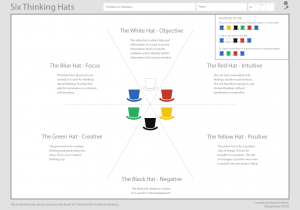
It would allow viewing the issue from all the angles and considering various aspects. It also helps to identify risks, to analyze the extent of associated risks, and to solve a complex issue. Another method is the Six Thinking Hats tool designed by Edward de Bono to analyze all facets of a problem and to counter our natural inclination to consider only one perspective. It is based on a simple parallel thinking process where all participants “put on” all six hats in sequence to challenge their modes of thinking and to explore new solutions.
Flexibility and creativity in decision-making will help the key players in your network to take responsibility, to change their habits and to make better decisions.
Sylvie Grégoire, MBA, CRHA, Certificate in NeuroLeadership
President of FlagFranchise and Totem Performance organisationnelle
We take millions of decisions, conscious and unconscious, every day, from easy ones such as putting one foot in front of the other one when we walk, reaching out to grab a cup of coffee, deciding to say hi to someone, to more complex ones such as choosing a franchise location or selecting franchisees.
The level of complexity of most situations and decisions in business is significantly higher, as well as the level of consciousness and cognition in business decision making. The more complex and conscious a decision is, the more likely it is to have a significant impact on the franchise network. So, how do we make sure we make the right decision? While there is no magic recipe, fortunately there are ways to optimize our decision-making process.
Memory and Effective Decision Making
First and foremost, our memory is a powerful tool. Information about decisions made is stored and used for future decisions, which means that our memory influences our decision-making process. The brain remembers that in a certain context our decision X led to the result Z. If the decision we took resulted in success, we subconsciously remember that.
Each decision helps create neural pathways in the brain, which will be subsequently used to support our judgment and decision-making tasks. As our decisions become more effective, we grow better, more skilled at making them. It is a trial and error principle. The brain continuously assesses and calculates the value of the decisions it makes. It builds an experience database, which improves the accuracy of predictions when it comes to evaluating the outcome of a certain decision. So, whenever the brain receives an error message, which means that the decision was incorrect, it would try a different behavioral pattern. The brain learns from its experience in order to speed up the decision-making process and to bring it to the level of automatism, even reflex. For example, if we get burnt once, the brain remembers that touching a hot surface would likely result in a burn. There is no need to touch a hot stovetop every time to see that it is painful. And what is even better, there is no energy spent on the decision not to touch it as our reflex prevents us from doing it.
It is important for the leaders who work in collaboration with the franchisor to become effective decision-makers to cut costs associated with poor time management and avoidable mistakes. Moreover, many decisions have a significant impact on the franchisor and on the entire network.
Key Decision-Making Challenges for Franchisors
Our decision-making process is quite complex and goes beyond repetitive tasks. Our emotional involvement, the context, social data are just some of the factors that affect our judgments and decisions. In addition, we are facing other challenges that make our decision-making process even more complex:
In short, decisions are obviously complex and energy-consuming. Given the impact they may have on the profitability of the franchise network, it becomes important to develop the skills of your leaders and to implement the right tools to improve the process.
Part 2 of this article, available in October, will give you several tricks and tips for effective decision making! Stay tuned!
Sylvie Grégoire, MBA, CRHA, Certificate in NeuroLeadership
President of FlagFranchise and Totem Performance organisationnelle
Is a franchisee an entrepreneur or not? This fundamental question is still baffling many stakeholders in franchising and entrepreneurship today. There seems to be no consensus in the business community. So what do you think?
On one hand, entrepreneurs who built their business from ground up tend to say that franchisees are more like managers and not entrepreneurs. First of all, let’s make it clear – there is nothing wrong with being a manager. Now we can discuss whether franchisees are entrepreneurs or not. There are a good number of rationalizations, which may explain why there are so many different opinions even among franchisors.
1 – Franchisor-Franchisee Relationship Model
We must remember that not so long ago franchisees were viewed as “branch managers” by some franchisors. Fortunately this perception is now becoming a thing of the past, which also brings about fundamental changes in the very profile of franchisees. Indeed, if franchisees are merely managers, their franchisors would be likely to pick people who have no — or little — entrepreneurial drive, or otherwise risk disagreements and conflicts due to differences in business visions. Today many franchise networks use business models or are at a level of maturity that would require a certain amount of entrepreneurship on the part of their franchisees. In fact, the more it is a partnership relationship between the franchisor and the franchisee, the more entrepreneurial sense the franchisee can have… to a certain extent, of course. A franchisee who is too much of an entrepreneur at heart is likely to become unhappy within a structured business environment that leaves little room for initiative.
2 – Business Model vs. Level of Entrepreneurship
The level of entrepreneurship that a franchisee should have varies greatly from one business concept to another. As some business models imply more routine than others, or the very franchise formula implies a high level of instruction and compliance, a franchisee with a manager profile would be a better fit than a hardcore entrepreneur. A person with a strong entrepreneurial sense would tend to question the existing procedures and methods, would be bored with any repetitive job and monotonous tasks, would resist guidance and supervision, etc. Franchisors must make sure they select the right type of franchisees whose desired level of autonomy (for them to be successful and happy) is in line with the level of support offered by the franchisor. Otherwise, conflicts may happen down the road. In some networks, having franchisees with a strong sense of entrepreneurship is very pertinent: to contribute to the development of the franchise banner (e.g. in a highly competitive segment) or to support the evolution of the business model in the case of a young network. Finally, some business models require the ability to perform in a context of uncertainty, where entrepreneurs are at their best. It is up to you to decide which entrepreneurial profile is the best match for your network, based on your business model, the level of your business maturity, your own personality, the investments required (risk-taking), etc.
3 – Entrepreneurs Start From Zero and Take All the Risks
One of the main arguments of those who see franchisees more as managers is the fact that franchisees have everything handed to them well-packaged, starting with the business model, methods and procedures, they are coached and supported, etc., while “entrepreneurs” must do everything themselves, building their business from ground up. Indeed, there is less risk involved when you start in a franchise network. In fact, it is even one of the many benefits of this business model. But still, starting a business, whether as part of a franchise or not, has its share of difficulties and perils, and requires hard work. Besides, if we apply the same logic, a person who takes over an existing business is not a “true” entrepreneur… Of course, he is! Every situation has its own challenges: while the franchisee can count on a large, strong parachute to support him and has access to a set of proven working methods from the very beginning to help him make his jump, he too has to take a leap into the unknown. It is his decision. He must take this step…
Here are some examples of entrepreneur definitions. They vary, but could easily apply both to those who start or buy a business and to franchisees:
What does it mean to be an entrepreneur?[1]
“An entrepreneur is an individual who has the courage to follow his dreams, to ignore the risks and to use his full creative potential to innovate.”
Valérie Bellavance
Senior Director for Quebec
Canadian Youth Business Foundation (CYBF)
“An entrepreneur is a person who takes action.”
Josée Cusson
Director of Operations
Canadian Youth Business Foundation (CYBF)
“An entrepreneur is someone who sees opportunities and solutions where others see issues and risks, and who knows how to make the most of these opportunities.”
Christian Bélair
President-General Manager
Regroupement des jeunes chambres de commerce du Québec (RJCCQ)
“An entrepreneur is a person who dares to take action and change life for better.”
Réjean Parent
President
Centrale des syndicats du Québec (CSQ)
“Becoming an entrepreneur is about giving yourself the freedom to excel.”
Louis Jacques Filion
Professor and
Member of the Rogers–J.A. Bombardier Chair of Entrepreneurship
HEC Montreal
The bottom line, everyone who is going into business must have a certain degree of entrepreneurship. Greg Nathan of the Franchise Relationships Institute pointed out that 40% of success rests on the shoulders of the franchisee himself. Therefore, franchisees must have a certain ability to take risks and a drive to go into business. Remember, it is important to evaluate the level of entrepreneurship needed in your network and to make sure that your recruitment process allows you to attract the right people. FlagFranchise can help you achieve this by preparing for you a comparison analysis of the entrepreneurial profile of your prospective franchisee and the desired profile for your banner.
Sylvie Grégoire, MBA, CRHA, Certificate in NeuroLeadership
President of FlagFranchise and Totem Performance organisationnelle
[1] http://www.jentreprends.ca/cest-quoi-un-entrepreneur
Our previous articles mainly focused on best practices to boost network performance. We believe that an effective franchisee selection and recruitment process is one of the key elements of success. Indeed, poor choices may come with bitter consequences for your reputation, the quality of your franchisor-franchisee relationships, as well as your wallet. You may already know from first-hand experience the cost of conflicts, or may have even suffered significant losses in royalty payments and market share because certain franchisees failed to exploit the full potential of their territory.
Establishing your preferred franchisee profile, evaluating prospects and implementing an effective recruitment process are simply essential to informed decision-making. When you register on FlagFranchise, you are asked to complete a questionnaire that will help you identify and prioritize your preferred franchisee profile. It will become your selection tool to find the best fit for your banner from the list of applicants looking for a franchise opportunity, aligning the skills and personal characteristics of aspiring entrepreneurs with the actual requirements and needs of your banner. One of the important factors to consider is the risk of overlooking the growth potential of a candidate simply because your preferred profile is too restrictive. You have to remember that if your franchise operation calls for specific, rare or numerous qualifications, it will be more difficult to find perfect candidates. Recruiting the best is a challenge by itself. So if your business concept or requirements are too stringent, you add another level of complexity to this franchisee recruiting challenge, potentially slowing down your network’s growth.
Your Business Concept
Let’s start with a good look at your business concept that you wish to franchise out. To be successful, your idea must be proven effective and unique in order to have a significant commercial appeal. However, some business concepts require a particular expertise or a specific training background, which limits the pool of potential franchisees and makes it difficult to find a good match. Under the circumstances, you have two options: adapt your concept or adapt your processes.
Adapting Your Concept
New franchisors should ask themselves if the skills, personal qualities, education, budget that they set as requirements may be difficult to find in one person in the territories where they plan to expand. The higher the initial requirements and the startup budget, the more difficult it might be to find candidates. However, it might not be too late to review and rethink your business formula, to adapt it in order to reduce recruitment inconveniences.
Existing franchisors can mitigate this risk by adopting a variable-complexity approach based on the candidate profile. For example, the concept may be adapted to include express or smaller franchise units available for less experienced candidates, and larger units reserved for expert franchisees. Why not start by granting franchisees the right to operate smaller points-of-service/sale and then, once they prove themselves, offer them larger, prime locations? Multi-unit franchising, which is a franchising model where franchisees operate several units, is becoming more common because of its many advantages. But we shall talk about it in more detail another time.
Optimizing Your Policies and Procedures
Adapting your business concept is one of the ways to improve the effectiveness of your recruitment efforts. You might be able to accept selection criteria that are a little less demanding and hard to find in one person if you implement practices and procedures that would make up for the lack of experience of your prospects. It may seem expensive to assign money and effort to structure your operations manual, your initial training to franchisees, and your support to franchisees in the form of ongoing coaching and continuous training. But imagine the potential ROI (return on investment) if the investment you made to strengthen your franchisee support system makes it easier for you to recruit more franchisees who reach profitability faster. The ROI can be exponential: more territories, more revenue and thus more royalties by territory, happier and more successful franchisees, etc.
In short, if you struggle to find quality franchisees for your network, our FlagFranchise tool can make your recruiting efforts more effective. We can also help you re-examine some of your methods and approaches in order to make your business concept more accessible and your network more efficient.
Sylvie Grégoire, MBA, CRHA
President, Totem Performance organisationnelle and FlagFranchise
Name the top 5 responsible franchises according to you. Why do they invest in sustainable development? What are your customers’ expectations with regard to sustainable development (SD)? Whether you are a franchisor or a franchisee, your primary mission is to deliver the best customer experience, i.e. to meet your customers’ expectations. Thus by ignoring the growing interest among consumers for SD, a banner takes a big risk. Moreover, this shift towards sustainability can help achieve significant savings in your operating costs.
Inspiring examples!
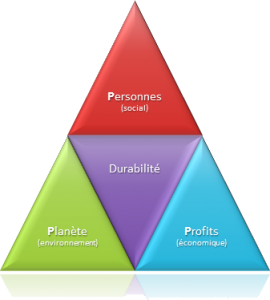
• Première Moisson’s 4 pillars of social responsibility are: products, community, environment and employees. One of the franchises in Montreal carried out an innovative project for the optimization of operations and energy efficiency, and as a result achieved annual energy savings of about 70%. (1)
• Starbucks is part of Montreal’s youth day project to help young people enter the job market. On this day, each employee is also encouraged to volunteer in their community (2). While there are no direct savings, this investment in social responsibility and sustainability can prove very profitable in the long term since Quebecers aged 18 to 24 now top the list of the most environmentally responsible age groups. (3)
What do your customers expect?
• According to a study by the Observatoire de la Consommation Responsable, consumers look for products with smaller environmental footprint from the point of view of ingredients and production (…) The number of green consumers in Quebec is up, 21.4% have a sustainable consumption index above 80 out of 100 (4).
• Quebecers use eco-friendly products and services primarily for their environmental, health and social benefits. (5)
What’s in it for you?
1) A growing number of competitors enforce cost-saving strategies in their networks. To offset the augmentation in the cost of food and commercial lease, such network-wide strategies can influence the bottom line profits. Examples: cutting energy and water consumption, and reducing waste allow for recurring earnings.
2) Most networks have relatively high employee turnover. It is difficult to attract qualified workers. The younger generations increasingly seek job opportunities in companies that share their values.
3) Franchisors with sound practices are keen on achieving profitability for everyone in the network. Better financial results also make recruiting new franchisees easier. Better profitability results ensure the sustainability of the network, which thus continues to create jobs.
Does it apply to your banner? Who is to commit, on the franchisor or franchisee side? In our article “The Strength of Franchising”, we talked about the importance for franchisors and franchisees to share the same values. Franchisors must build a strong network culture, implement sound practices and apply quality methods, and they must make sure that everything is well documented to ensure successful knowledge transfer. For their part, franchisees must be autonomous and ensure the financial health of their business. So, how do you integrate SD?
Franchise networks are different from the corporate world where the head office issues guidelines to be first tested in a pilot project at one of the divisions and then, if proven viable, to be applied throughout the company. So to make your sustainable organizational improvement project a success, it is important to:
1) Make sure your franchisees are fully engaged and committed. Otherwise your efforts will become part of the sad statistics showing that 70% of projects fail. Any SD initiative must come with a sound change implementation strategy.
2) Go step by step. There is no added value in trying to execute large-scale projects all together. A smaller project that can be completed in a short timeframe can be put into action at 1 or 2 points of service, for example. If the savings are confirmed, the implementation can be extended across the network before embarking on the next project, and so on. Nothing can boost the enthusiasm and drive to be “responsible and sustainable” more than a successful project.
3) After the implementation, make sure that the operational processes are adapted and the employees are well aware. Here are some examples that unfortunately can have a negative impact on the anticipated cost savings, and even cast a shadow on the brand image.
a. Conscious consumers who take the trouble to bring their reusable cups are taken aback when they are handed an empty paper cup to enter a contest or to accumulate points.
b. Overpacking your products or overusing cleaning agents just because they are green will make people question your methods.
c. As a customer or employee, which of the following images better represents your values?
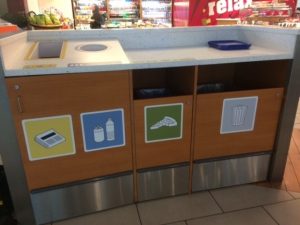

Moreover, to deliver a strong consistent message your must effectively communicate and raise awareness of your efforts. In other words, when the franchisor pledges the commitment of all the restaurants in the network to the SD principles, if there is no clear understanding and support on the part of each and every employee, the overall customer experience will suffer.
Whether you are in the retail, food or health industry, a strong commitment to sustainable development in the context of strategic planning will add value to your offer. The Totem team can help you identify and prioritize your top projects, and support you in their implementation till the achievement of savings.
References: (1) Corporate Responsibility – Première Moisson: https://premieremoisson.com/en/corporate-responsability (2) Starbucks Global Responsibility Report 2013
https://globalassets.starbucks.com/assets/b48b38aed56e4fdd8dcdbbfad23e3242.pdf
Starbucks’ Social Responsibility and Sustainability
https://www.starbucks.ca/responsibility (3) https://www.protegez-vous.ca/Nouvelles/Affaires-et-societe/La-consommation-responsable-est-elle-encore-a-la-mode
(4) http://consommationresponsable.ca/wp-content/uploads/2016/11/Barom%C3%A8tre-2016-final.pdf
(5) http://consommationresponsable.ca/wp-content/uploads/2013/11/OCR-La-valorisation-par-les-Qu%C3%A9b%C3%A9cois-de-l%C2%B9engagement-responsable-des-d%C3%A9taillants.pdf
Par Marie-Josée Roy, ing., M.Env.
Experte gestion stratégique, performance et durabilité
Totem Performance organisationnelle
In our article last month we talked about the importance of having a reliable and effective franchisee selection process in place in order to avoid the risk of rendering your network as fragile as a domino structure where just one vulnerable tile could lead to the collapse of the whole composition. Once you attract good candidates through the application of proper marketing strategies and tools, you must analyze their profiles and compatibility with your network. Your recruiters are expected to wear several hats at the same time to ensure the development and growth of your network: sales, marketing, HR, to name a few. Moreover, they must stay impartial and not be fooled by the natural biases that can alter their perception of a candidate.
As Christine Cox from the NeuroLeadership Institute says, if you have a brain, you are biased.[1] So how do you make sure that when you meet your candidate, you can make the right call, avoid being distracted by the natural biases of our brains that cause us to misjudge people, seeing qualities and skills that are simply not there?
The first step is to be aware of such biases in order to be able to design your selection process to mitigate them, or at least to reduce their negative impact. Do you think you know the pitfalls? While some of them may be familiar to you, can you be certain that they have never caused you to take a bad decision or will never influence your judgment in the future? Remember, if you have a brain, you are biased.
Similarity bias
This relatively well-known bias refers to our natural tendency to attribute more credibility to people who seem to belong to the same group as us, i.e. people of the same age, race, interests, who come from the same background and have a similar personality, etc. Whereas those who are likely to be different from us are automatically perceived in a more negative light and get fewer merit points from us. To save time and effort, our brains tend to associate similarities with certain features by using known references. In this case it is YOU.
Confirmation bias
Our brains tend to analyze information about a candidate in a way that confirms our preexisting beliefs and proves the expected outcome of such analysis. Indeed, if we enter the selection process with the mindset that the person is a good candidate, we tend to overlook the clues – the red flags – that suggest that he is not compatible with the banner, and instead focus only on what would prove our initial belief.
Anchoring bias
A little less known, this bias can clearly get us to take a wrong route in choosing a candidate. Our brains tend to rely heavily on the first piece of information we receive and use it for subsequent judgments. Yes, the famous first impression! And it has been scientifically proven too. In fact, the first impression is like an “anchor” that, once set, will become the center point for all subsequent information, thus creating a bias towards interpreting other data around it in the same light.
Probability bias
If I tell you that the probability that people with a certain trait have only a 5% chance to succeed in your network, would you be more inclined to accept or to reject such candidate? Neuroscientists have tested this theory and came to the conclusion that if we think that a person fits the profile needed for the network, we shall be convinced that in our context the probability of his success is greater than 5%.
Risk of losing bias
When we are sure that everything will go as expected, we are less likely to take risky decisions. At the same time, if we are less certain of our success, we would take more risks to avoid losing. For example, our brains may play tricks on us if we have significant market development projects underway and we are afraid we might not find enough franchisees for that. In this case, franchisors will be more inclined to take a risk by accepting a candidate who does not fully match the requirements. In contrast, franchisors who are sure to easily attract franchisees would tend to take very few risks in their selection of new franchisees.
Lost investment bias
Once we have invested time, money and effort, we tend to find it difficult to give up a candidate. Our judgment is skewed based on the investment made.
In short, as you can see, it is no easy task to select the best franchisees: our brains take shortcuts to save time and effort, and may end up pointing us in a wrong direction. Effective tools and a sound selection process can help your recruitment manager make the right decisions. Indeed, if your recruiters feel torn between signing up new franchisees on one hand, and on the other hand staying open-minded and objective to select the best fit for the network, then implementing a sound process to mitigate such natural biases could be a valuable decision for your banner. First, our FlagFranchise.com franchisor-franchisee matching tool can optimize the quality of the pool of prospects for your selection process, and advise you on strategic questions to ask. Second, your selection process must include steps to mitigate the natural biases of our brains.
Our expert Totem Performance organisationnelle team would be happy to assist and support you in the optimization of your franchisee selection process.
Sylvie Grégoire, MBA, CRHA
President, Totem Performance organisationnelle and FlagFranchise
[1] Professor at the Center for Neurodevelopmental Disorders at the New York University Langone Medical Center
If you have seen the movie “Collateral Beauty”, in theaters now, you have certainly noticed the elaborate domino formations created by the main character (played by Will Smith). Looking at these masterpieces, we can’t help but admire the painstaking efforts and all the attention to detail that went into these grandiose yet fragile structures. Each domino tile is crucial for the strength of the whole arrangement. Each one becomes an essential element of the composition where it is placed in a fine balance with the other pieces. Standing up, it is a pillar for the growing, expanding domino run; but should it fall, it will force all the other domino tiles down with it.
By understanding the vulnerability and strength of a franchisor-franchisee relationship, we can’t help comparing banners to these domino structures, more or less grand and splendid, depending on the size of a franchise network. While each franchisee is an independent business owner, he still relies on the banner with which he is affiliated. Today, this understanding is all the more important in the world where consumers like taking their opinions to social media sites.
Did you know that while satisfied customers talk to three friends about their experience, angry customers will let twelve people know about their bad experience? And with all the forums, blogs, Facebook, Twitter, TripAdvisor and many other online platforms that invite us to leave comments and rate businesses directly from our smartphones, it happens in an instant! More than 90% of Internet users read reviews before making a purchase decision, and 74% of users need to read 2 to 7 reviews to have the necessary information to judge a product[1]. Moreover, according to a study by Oracle, 56% of consumers will never buy again from a merchant after a bad customer experience[2].
However, for a franchise, the term merchant takes on greater meaning since it applies not only to a single location, but to the entire franchise network. For example, if I went to one of the St-Hubert restaurants and was provided with excellent service, I subconsciously associate the entire St-Hubert chain of restaurants with a pleasant experience. And the opposite is true too.
The strength of a banner does not only depend on the level of customer satisfaction, but also on the wellbeing of its employees, who affect the business health of the franchisee, who then influences the strength of the franchisor… Do you see the domino effect?
All elements are vital for the health of the network. It starts with the franchisor, who builds a strong foundation for a well-balanced franchise network by selecting the right entrepreneurs to be a perfect fit with the banner, to share the core values, likely to be comfortable and happy as part of the network and thus to ensure the prosperity of their business. And when the boss is happy, his troops are much more likely to be happy too, therefore boosting the happiness index in the workplace. This positive attitude will inevitably reflect on their customers too because, just like smiling, happiness is contagious!
However, even a determined and driven franchisee who lacks the necessary business skills may fail to run and grow a successful venture. In this case, the effects will be the opposite: customer experience, employee relations and partnerships with suppliers are likely to take the hit. The poor performance results of a franchisee will also have a negative impact on the market share in the territory where he operates, and the competition may move in to capture the underexploited market opportunities. It would take a lot of energy on the part of the franchisor to rehabilitate the situation, energy that otherwise could be applied to achieve growth across the network.
Moreover, unhappy franchisees can grow critical of their banner. They may taint the relationships between the franchisor and other franchisees in the network, and impair their profitability over time. As a result, networks will struggle in this unhealthy environment, and franchisors will find it difficult to attract new franchisees because the very credibility of the network is at stake. A bad choice of franchisees may also end in legal disputes, which is a costly and challenging experience likely to upset your relationship with your best franchisees and even tarnish your banner’s reputation. In short, failing to take the key selection parameters into consideration when choosing new franchisees for your network may put the continuity and sustainability of your banner at risk. The domino effect…
Of course, the franchisor and the franchisee must accept their respective level of responsibility. In addition to attracting and recruiting the right candidates for the network, the franchisor must build and implement a strong network culture, sound processes and quality business formulas, as well as make sure these are well documented to ensure efficient and effective knowledge transfer. For his part, the franchisee must be self-sufficient and autonomous, and ensure the financial health of his business without pointing the finger at the franchisor in case of any management mistakes.
Moreover, a good prospective franchisee on paper may not be suitable for your particular network. While this step is too often overlooked by new franchisors, it is vital to identify your desired franchisee profile and to implement a franchisee selection process for your network. FlagFranchise.com can assist and help you to determine your preferred franchisee profile, position your banner and promote your brand image among prospects. Our new search platform also quickly sorts and filters its database to identify the entrepreneurs who meet your requirements in order to save you time and money and to prevent costly recruitment mistakes before signing the franchise agreement. Using this flexible tool, you can easily customize the search parameters and target specific selection criteria, thus ensuring better return on your recruitment efforts and optimizing your network’s performance.
Don’t wait till your domino tiles slip and fall, start building your solid system now to become the foundation of your banner’s strength!
Sylvie Grégoire, MBA, CRHA
Présidente, Totem Performance organisationnelle
[1] http://mickaelguillois.typepad.fr/mkgclient21/2012/01/un-client-m%C3%A9content-en-parle-%C3%A0-11-internautes-un-satisfait-%C3%A0-3.html
[2] http://fr.watcheezy.com/quelle-difference-entre-client-satisfait-client-fidele/
Franchise companies face several particular challenges that include developing a strategic partnership relationship with their franchisees and standardizing their banner requirements across the network. One of the most common approaches used by many franchisors is to hold quarterly or annual conferences for their franchisees. Whether by mutual obligation or on the franchisor’s initiative, it is not easy to motivate attendance and above all to optimize the added value of such reunions for the network as a whole. Neuroscience inspires several relatively easy strategies to achieve that.
Everything in Good Time
Many franchisors structure their conferences in a way that allows them to build a positive franchise image and to cover a maximum of topics. Time is money for franchisees and meetings become costly, therefore priority is given to such topics as achievements, progress, comparative analysis, etc. Yet neuroscience teaches us that the more complex new information is, the more energy and effort it requires from the brain to process it since new neural circuits must be created. Since general information content usually requires little energy as we can rely on previous experiences or similar data stored in our memory, it should be scheduled at the time when the brain is more likely to be fatigued. Whereas presentation of demanding topics such as identifying challenges and solutions, new training content, major changes to come, etc. should be planned when the brain is rested and alert.
The Importance of Themes Debunked
Many franchisors set a theme for each conference and build their content around it, be it franchisee autonomy, standardization of services, evolution of the business model, etc. However, this approach has many pitfalls that limit the optimization of impacts for the network as the retention and recall of the content presented this way fade off over time. To maximize the amount of information that will be remembered, the brain must encode it to make it easily accessible later. Unfortunately, the statistics do not prove the effectiveness of the current methods of learning transfer: only 47% of people believe that they apply their learning in their jobs immediately after the training. This level of application falls to 12% six months after training and to 9% after one year.[1] To boost the Return on Investment of franchise reunions, we suggest several strategies inspired by neuroscience and specifically based on the AGES model (Attention, Generation, Emotions, Spacing).
Attention
There is a direct relationship between attention and learning. Attention has limits: we can pay full attention at most for 20 minutes at a time. Attention is also susceptible to interference: in our world of technology, many stimuli disturb the attention of franchisees even in the conference room. Since quarterly conferences usually last for one day and annual conferences extend from 2 to 3 days[2], it is important to find ways to stimulate the interest of the participants throughout the event. It is more efficient to ask everyone to switch off their mobile devices and offer breaks during the day to catch up with email. Many people believe they can be more efficient if they address issues by email while listening to the presentations. But multitasking goes against learning optimization. Studies show a significant drop in performance as soon as a person’s attention is divided between two or more tasks. Another strategy to sustain attention would be to vary the content delivery format in order to maximize the level of engagement: introduce periods of codevelopment or networking, avoid lengthy presentations, have more than one speaker to deliver the content, invite experts, promote experience sharing and interactivity to mix theory and, for example, success stories from individual franchisees, and encourage them to find solutions to issues as part of experiential activities through healthy fun competition (competition improves attention).
Generation
Our memory is a network of multiple microconnections allowing us to refer to our previous knowledge and experience. In fact, some elements are classified in a certain way to make it easy to find relevant information later. All new information that we consider pertinent will be added to this vast web of data for future use. The more valuable your franchisees believe the information is, the easier it would be for them to link it to the data stored in their brain. Thus you should prioritize the content that would be most useful for the franchisee, and not only based on what you consider important yourself.
Emotions
There is a strong correlation of vividness of a memory and the emotionality of the original event. [3] Many franchisors use the negative emotions of anxiety or fear to generate that emotional involvement, for example, presenting statistics on the most alarming market trends, competition or the network’s performance. While it is easier to invoke negative emotions and it works as a tactic, positive emotions would be much more efficient, since people feel more engaged when they receive recognition and reward. Make your meetings enjoyable and fun, and use negative information as an opportunity for interactive workshops to generate ideas and to help franchisees make connections between the new information and their reality. You can also invite an inspiring personality to speak at your event who could motivate and mobilize your franchisees, which will leave a stronger emotional footprint.
Spacing
Studies show that spacing information sessions rather than cramming all content in one intense meeting would lead to a higher retention level of new information. Organizing the main topic into smaller learning blocks delivered throughout the duration of the conference would be much more effective than one marathon session. It is difficult to say what would be an optimum timing of spacing between learning blocks, but it is safe to say that any spacing is better than no spacing at all. The brain has more time to assimilate new data and to build the necessary connections in order to understand and retain the information. Some suggestions: send out the information to be discussed to the franchisees prior to the conference, organize and deliver it in smaller blocks throughout the agenda, plan a follow-up session with management advisors and, during future communications or meetings, take the opportunity to collect feedback and thus refresh the key points.
The take-home message is that by designing your conferences in line with the natural functioning of the brain, your franchisees are more likely to use the new skills and information in their daily lives in the long term, thus optimizing the ROI of your conventions.
[1] http://www.affairesrh.ca/gestionnaires/solutions-gestion/fiche.aspx?p=433839
[2] www.franchising.com/articles/maximizing_the_benefits_of_your_franchisee_convention.html
[3] Dr. Lila Davachi, Dr. Tobias Kiefer, Dr. David Rock and Lisa Rock, NeuroLeadership Journal, Learning That Lasts Through AGES, 2010.
The role of area managers has evolved in most franchise networks in recent years from a supervisor, offering directions, to a facilitator, helping select the best options. As I showed in my previous article, this is a result of changes in the relationship between franchisors and franchisees. So the question is: what is the most effective, powerful solution to assist franchisees – is it advising or coaching?
Statistics
The evolution of the franchise industry calls for the reorientation towards coaching. First, franchisees of several franchise networks gained experience and maturity, and developed advanced skills as entrepreneurs. It became increasingly difficult to find area managers whom they would find credible and experienced enough. As you will see from this article, a coaching approach might be a solution to this issue. Second, some networks increasingly promote multifranchising[2], which makes the role of managers even more complex. Coaching might take some load off their shoulders and allow them to direct their energy towards more strategic actions. Finally, Y Gen franchisees are known to respond better to coaching than to instructions, and statistics show that their number in networks is on the rise: 20% of franchise top management and 10% of franchisees, and growing exponentially.[3]
Advisor vs. Coach
Both have the laudable goal to provide support to franchisees. The differences may seem subtle, yet they are evident in what is said or not said to franchisees, or what is done or not done. Here are a few examples:
From Advising to Coaching
A fundamental change is needed to coach franchisees rather than advise them. Out of habit, most area managers and advisors tend to give their opinion and to suggest solutions, or simply put, to take the lead in each issue. These are normal reflexes considering the nature of their work. It is also consistent with the franchise relationship model where the franchisor feels obliged to provide maximum services to franchisees. However, feeding ready-made answers to franchisees is nothing more than a short-term solution. In the long run, they might get used to turning to the territory manager for answers and guidance, and fail to develop leadership skills. As we showed in the previous article on the franchise network relationships, coaching helps networks to grow by making each franchisee independent, self-reliant and responsible for the development of his company. A coach has a relationship of equals with franchisees; he is neither better nor more experienced. He remains impartial and enables them to gain clarity in understanding the situation by asking strategic questions. He applies powerful tools and effective methods to develop the skills of franchisees.
Coaching Methods
There are many coaching methods. The important thing is to find the one that suits you best. The GROW[4] model is a simple yet powerful framework to apply to your coaching sessions. It basically consists of four distinct steps, during which the coach offers guidance through strategic questions:
Although the four-step process seems straightforward, it is the execution that might be tricky. Coaching is a philosophy, a collaborative approach and a rigid method. It is about asking the right questions. There are many traps along the way. When I was giving coaching training, I saw how difficult it might be for some to avoid falling victim to their well-anchored habits. Once they master coaching techniques, they realize how much they can actually help their franchisees make better decisions, solve problems, learn new skills and live up to their full potential.
In Part 2 of the article to be posted in April, we will discuss the main mistakes franchise network advisors make when they transition to coaching. We will address the most common challenges in the implementation of this change in order to assist your franchisees and help you grasp the subtlety of coaching.
Sylvie Grégoire, MBA, CRHA
President, Totem Performance organisationnelle
[1] Sir John Whitmore, Coaching for Performance, Fourth Edition
[2] Sir John Whitmore, Coaching for Performance, Fourth Edition
[3] franchiseblast.com/how-forward-thinking-franchises-coach-their-franchisees/
[4] Sir John Whitmore, Coaching for Performance, Fourth Edition
The level of personal engagement and commitment of franchisees to your banner has an immediate effect on customer experience, as well as on the individual performance of your franchisees and on the overall performance of your network. While engagement is not something you can force upon anyone, here are several tips to help you inspire your franchisees.
“If it’s to be, it’s up to me.”
Dr. Robert Schuller, motivational speaker
ARE YOUR FRANCHISEES HAPPY?
According to a study by the Franchise Relationships Institute, 49% of franchisees say that their business drains them emotionally, and 43% do not have a balanced life. The impact of such dissatisfaction has a devastating effect on the wellbeing of their network. They are likely to be pessimistic, focus on issues rather than solutions, and have a negative effect on customers and other franchisees. In addition, they will be unreceptive to new ideas, do little to develop their own business or the network, and so on. In short, they would negatively impact everyone. Psychology studies identify three key components of employee satisfaction and happiness: 1) feeling competent, 2) feeling accomplished, and 3) having satisfying human relationships.
Also, the latest research in Neuroleadership, a fascinating branch of neuroscience, shows that, depending on whether the reality is consistent with our needs, our brain reacts in one of the two ways when exposed to situations or stimuli: engaging or disengaging. A disengaged franchisee feels anxiety, is on defensive, lacks constructive attitude, has low energy and little interest in his business, tends to doubt his franchisor, and is less likely to take risks. On the other hand, by meeting the needs of your franchisees, you boost their emotional and cognitive capacity. Just imagine the effects on your network!
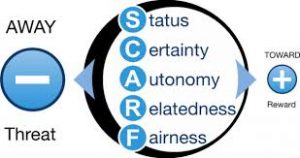
5 Primary Needs According to Neuroleadership:
Status or relative importance to others
Certainty or security to be able to predict the future, to adapt
Autonomy to control your environment and to have choices
Relatedness to a group, the sense of safety with others
Fairness and justice or a perception of fair exchanges between people
TIPS AND INSIGHTS TO SATISFY THE 5 PRIMARY NEEDS
By applying these tips, you will improve your network’s engagement and commitment to your banner, but also you will create true brand ambassadors. Using an analysis tool, we can help you identify improvement priorities to boost your network engagement and loyalty level based on your particular business context and challenges.
Sylvie Grégoire, MBA, CRHA
President, Totem Performance organisationnelle